

Mhairi Bowe
Mhairi Bowe is an Associate Professor of Social Psychology in the School of Social Sciences at Heriot‑Watt University, where she specialises in identity processes, community psychology, and mental health. She is a Chartered Psychologist, an Associate Fellow of the British Psychological Society (BPS), and a Fellow of the Higher Education Academy. Her academic profile reflects wide-ranging contributions to social psychology through research, teaching, supervision, and professional leadership.
Bowe completed her undergraduate, MSc, and PhD degrees at the University of Dundee, with doctoral work examining temporal aspects of place identity and their relationship to social identity and mental health. She subsequently held progressively senior academic roles at Nottingham Trent University from 2010 to 2022, including Lecturer, Senior Lecturer, and Associate Professor, before joining Heriot‑Watt in 2022. Bowe has held several significant leadership roles, including serving as Chair (2021–2023) and Past Chair (2024) of the BPS Social Psychology Section. She is the former Deputy Director of the Centre for Applied Behavioural Sciences and is the founding Director of the SOCIAL Impact Lab at Heriot‑Watt. Additionally, she serves as Deputy Editor‑in‑Chief of the British Journal of Social Psychology.
Her research encompasses social prescribing, community volunteering, loneliness reduction, poverty and food insecurity, stigma, identity transitions, and the health implications of social and collective identities. She employs both qualitative and quantitative methodologies and has published widely, contributing to high‑impact areas of applied social psychology.
Her career also includes substantial engagement with interdisciplinary research networks, media outreach, and applied community partnerships, reflecting a commitment to public engagement, knowledge exchange and the translation of social psychological research into real‑world impact.
https://researchportal.hw.ac.uk/en/persons/mhairi-bowe/

Liz Cooper
Liz Cooper is an Assistant Professor in Management at Edinburgh Business School. Her research examines how sustainability is negotiated in organisational settings, primarily using discursive psychology. She specialises in analysing workplace interactions about environmental and social sustainability, with expertise in product and supply chain sustainability and public procurement. Before academia, she spent over a decade in sustainability management across universities and international NGOs. Liz completed her PhD in Psychology at the University of Edinburgh and has since received funding from the ESRC, the British Academy, and the British Academy of Management.
https://researchportal.hw.ac.uk/en/persons/elizabeth-cooper/

Glenn Hitchman
Glenn Hitchman is Professor and Head of Psychology at Heriot-Watt University Malaysia. His research background spans neuroscience, cognitive and social psychology, with a particular focus on parapsychology and individual differences. He has led international collaborations and previously directed the Exceptional Experiences and Consciousness Studies group at the University of Northampton. Glenn also spent two years teaching and researching full‑time at universities in China. He is a Senior Fellow of the Higher Education Academy, a chartered member of the British Psychological Society, and serves as international liaison for China and Malaysia with the Parapsychological Association, where he has also been a board member.
https://researchportal.hw.ac.uk/en/persons/glenn-allan-michael-hitchman/
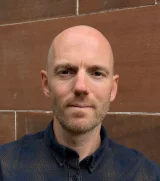
Mark Atkinson
Mark Atkinson is an Assistant Professor of Psychology in Edinburgh with a background in psychology, linguistics, and maths. His research explores how sociocultural factors shape the transmission, maintenance, and complexity of socially acquired behaviours, including social conventions and communication systems. He applies social learning and social identity approaches to public health, examining how leadership communication and group processes influence public responses during health emergencies. Mark completed his PhD at the University of Edinburgh and has held research and lectureship roles at St Andrews, Stirling, and the Scottish Government, specialising in large-scale behavioural experiments.
https://researchportal.hw.ac.uk/en/persons/mark-atkinson-2/

Katharina Addington-Lefringhausen
Dr Katharina Addington-Lefringhausen is a cross-cultural social psychologist and Associate Professor at Heriot-Watt University, with expertise in quantitative research and focussing on acculturation, intercultural competence, and intergroup ideologies. Her work focuses on how majority group members (e.g. UK nationals) adapt their identities, values, and behaviours to other cultures experienced in a shard society and how these processes shape intergroup relations, sociocultural and psychological outcomes (e.g. well-being). Katharina has also contributed to work on intragroup marginalization, mental health literacy, social media use and health behaviours as well as cross-cultural measurement and construct validation. Beyond academia, Katharina engages in applied intercultural work through leadership roles at SIETAR UK (SIETAR UK Board – SIETAR UK) and Europa (SIG Migration – SIETAR Europa Special Interest Group).
https://researchportal.hw.ac.uk/en/persons/katharina-addington-lefringhausen/

Emily Messer
Dr Emily Messer is an Assistant Professor of Psychology at the Edinburgh campus with a background in social cognition, primatology, and science communication. Her research interests are in social behaviour, learning, teaching, cultural evolution, conformity, and prosociality. Specifically, she is interested in exploring how different social and cultural contexts influence innovation, learning, and the transmission of information in primates. She works with children in diverse global populations, apes, and monkeys. As a result, her research crosses themes in cognitive, comparative, cross-cultural, developmental, and social psychology. Emily conducted her PhD at the University of St Andrews and has held research positions and academic roles at the University of St Andrews, The University of Texas at Austin and Heriot-Watt University,
https://researchportal.hw.ac.uk/en/persons/emily-j-e-messer
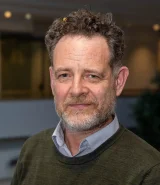
Marc Alexander
Marc Alexander is an Assistant Professor in Social Research Methods in the School of Social Sciences at Heriot-Watt University. His research uses the combined qualitative approaches of conversation analysis and discursive psychology to investigate interactions in institutional environments. Marc focuses on examining telephone helpline recordings from a variety of settings, such as neighbourhood mediation, the Shelter housing charity, and the police emergency service. He is currently collaborating with the Mind mental health charity analysing calls to their helpline service focusing on suicidal ideation. Marc is experienced in communication skills training with professionals using the Conversation Analytic Roleplay Method (CARM), in which practitioners work with recordings from their own workplace to establish ‘what works’ interactionally (and what does not) in calls to their service.
https://researchportal.hw.ac.uk/en/persons/marc-alexander/

Katerina Strani
Katerina Strani is Professor at the Department of Languages and Intercultural Studies and coordinates the Migration theme at the Intercultural Research Centre (IRC). Her academic background lies in Languages (French and Russian) and Political Theory, and current research interests are in online hate speech, identities and belonging in the context of migration. Katerina has published widely on intercultural dialogue, racism and hate speech, language and heritage, and has edited three volumes: Multilingualism and Politics (Palgrave, 2020), Intercultural Issues in the Workplace (Palgrave, 2023), and Heimatkunde: Explorations of Place and Belonging (Lit Verlag, 2024).
Katerina’s research is applied and collaborative. She has led EU-funded projects addressing racism and discrimination, as well as the development of two language and culture apps: one designed to support newly arrived migrants and refugees, and another focused on endangered languages. Katerina has also led two British Academy-funded projects on online hate speech.
She was Visiting Professor at Adam Mickiewicz University in Poznań (2021-2022), where she taught and conducted research in two departments: the Institute of Applied Linguistics, and the Department of Ethnology and Anthropology.
https://researchportal.hw.ac.uk/en/persons/aikaterini-strani/
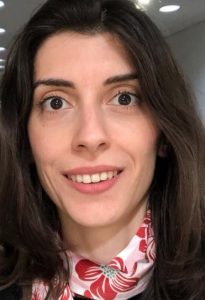
Melis Ceylan
Melis Ceylan is an Assistant Professor of Marketing at Edinburgh Business School, Heriot-Watt University. Her research looks at how social context and communication shape consumer behaviour, with a growing focus on sustainable consumption. She has studied how message framing affected social distancing and helping behaviour during the COVID-19 pandemic, how calorie posting and the presence of others shape food choices, and how perceived human presence in shared accommodation can create a sense of social connectedness. She also works on social media influencer marketing and brand trust. Her current projects examine second-hand markets and compare AI and human communication agents in promoting sustainable choices. Her work has appeared in several research outlets, including the International Journal of Advertising, Journal of the Association for Consumer Research, and Journal of Consumer Behaviour.
https://researchportal.hw.ac.uk/en/persons/melis-ceylan/
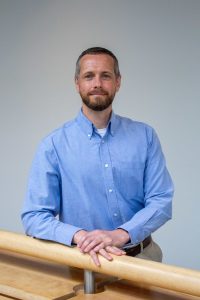
Pete Coffee
Pete Coffee is a sport and social psychologist examining the social identity approach (social identity theory and self-categorisation theory) to sport, exercise, and health. His research has underpinned income generation, course development, teaching, consultancy, and public engagement activities. Pete is passionate about mission-focussed research and scholarship to have real impact. He has received funding for research from Research Councils, Government, and Charities including UKRI (ESRC), The Scottish Funding Council, Scottish Rugby, and the Gaelic Athletic Association. Pete’s academic qualifications include a BSc, PGCE, and PhD from The University of Exeter, UK. Pete is a Chartered Psychologist with The British Psychological Society, a Registered Sport and Exercise Psychologist with the Health and Care Professions Council, a Senior Fellow of the Higher Education Academy, a Fellow of The British Psychological Society, and former Editor-in-Chief of Psychology of Sport and Exercise and International Review of Sport and Exercise Psychology.
https://researchportal.hw.ac.uk/en/persons/pete-coffee/
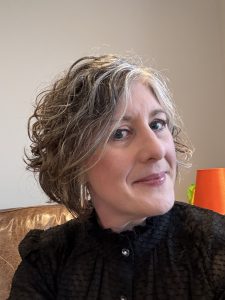
Jemina Napier
Born in the UK, Jemina is a sign language interpreter researcher, educator and practitioner. She has practiced as a sign language interpreter since 1989 and works between English and BSL, Auslan or International Sign, and occasionally ASL. Jemina began her research career in Australia, migrating from London to do her PhD in Linguistics at Macquarie University, which led to the book Linguistic Coping Strategies in Sign Language Interpreting (2022/ 2016 2nd Ed.), along with the textbook she co-authored with Della Goswell and Rachel McKee (Sign language interpreting: Theory & Practice); both of which have become seminal readings in interpreter training programmes worldwide. She stayed as an academic at Macquarie where she established the Postgraduate Diploma/ Masters programme in Auslan/English Interpreting, and then went on to become Head of Translation & Interpreting and the Director of the Centre for Translation & Interpreting Research before relocating back to Edinburgh in the UK to take up the position of Chair and Professor of Intercultural Communication at Heriot-Watt University. With almost 200 publications, Jemina continues to conduct research on a range of topics related to mediated communication, primarily related to access to public services via interpreting and child language brokering in deaf-hearing families. Her most recent series of projects have focused on the experiences of deaf women seeking support for reporting domestic abuse. Jemina has received recognition of her contribution to research and the sign language interpreting profession as a UK Fellow of the Academy of Social Sciences, a Corresponding Fellow of the Australian Academy of Humanities, a Fellow of the Association of Sign Language Interpreters, and Honorary Life member of ASLITA.
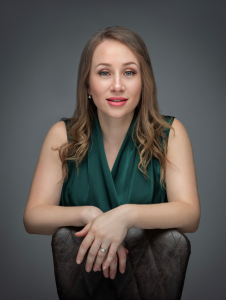
Melissa Pavetich
Melissa Pavetich is an Associate Professor of Psychology at Heriot-Watt University, where her research focuses on social psychology, particularly intergroup relations, prejudice, intergroup contact, and meta-perceptions. Her work examines how people perceive the ways members of other groups view and treat them, and how these perceptions shape intergroup attitudes, emotions, and behaviour. A central focus of her research is meta-humanization – the belief that members of an outgroup see one’s own group as fully human – and its potential to reduce prejudice, bridge divides between majority and minority groups, and improve relationships between groups in conflict. Her broader research programme explores the psychological processes underlying intergroup conflict, dehumanization, and political polarization, with the aim of identifying ways to foster more positive, inclusive, and cohesive societies.
Melissa completed her PhD in Social Psychology at the University of Greenwich in the United Kingdom. Melissa holds several leadership roles, including Chair of Psychology Departmental Research Ethics, and Year 1 and 2 Coordinator.
https://researchportal.hw.ac.uk/en/persons/melissa-pavetich/
Monica Tamariz
Dr Monica Tamariz is an Associate Professor in Psychology. She is interested in cultural evolution and social transmission. She has world extensively on language evolution, investigating the contribution of social and cultural processes, such as population transmission patterns and communication, to the emergence of linguistic structure. She has used and developed iterated learning (also called transmission chain) methods and conducts experimental studies usually with associated computer simulations. She is also interested in cultural evolutionary theory and in cultural-evolutionary explanations of other domains such as dance (EU funded project https://www.carouseldancing.org/) technology or art. Recently she has developed and studied creative methods to teach data science and research methods.
Monica did an MSc in Cognitive Science and a PhD in Linguistics and two postdoctoral fellowships (ESRC and Leverhulme), all at the University of Edinburgh. She was a visiting fellow at the Max Planck Institute for Psycholinguistics (Nijmegen, NL) and in Psychology at the University of Granada (Spain).
https://researchportal.hw.ac.uk/en/persons/monica-tamariz/publications/